

Dülger Law Office/Publications/Book
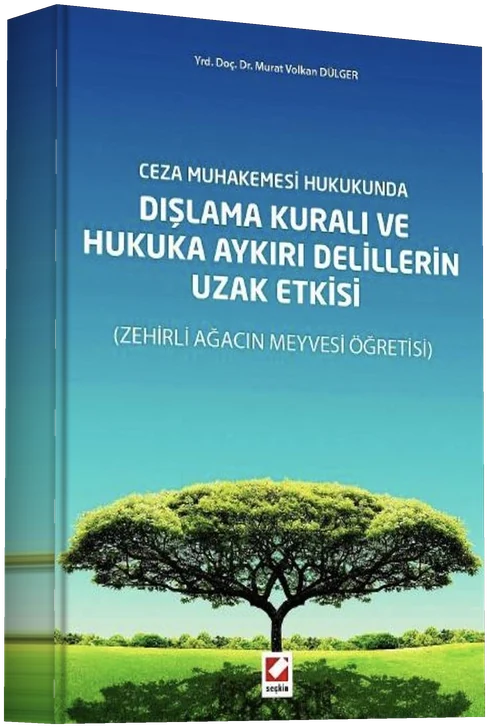
The Exclusionary Rule in Criminal Procedure Law and the Derivative Effect of Unlawful Evidence (The Fruit of the Poisonous Tree Doctrine)
(Ceza Muhakemesi Hukukunda Dışlama Kuralı ve Hukuka Aykırı Delillerin Uzak Etkisi (Zehirli Ağacın Meyvesi Öğretisi))
About the book
This work was written in Turkish. The summary on this page is a translation; the citation gives the original title in parentheses.
In a speech at the National Book Exhibition in London on 2 November 1949, Winston Churchill said: “Writing a book is an adventure. To begin with it is a toy and an amusement. Then it becomes a mistress, then it becomes a master, then it becomes a tyrant. The last phase is that just as you are about to be reconciled to your servitude, you kill the monster and fling him to the public.” While writing this book I lived through exactly what Churchill described more than half a century ago. As I write this preface, which is in fact my last word on the book, I am freeing myself from this pleasant servitude and leaving the book to the attention of its readers. Before doing so, however, I would like to say my last words on the book under the heading “preface” and to thank those whose help, support and understanding I received during this process.
Unlawfully obtained evidence and the derivative effect of unlawfully obtained evidence were subjects that interested me and on which I had been working. The fact that I taught these subjects for many years at the in-service training seminars organised by the Istanbul Bar Association’s Code of Criminal Procedure (CMK) Service played an important part in this. With that as my starting point, I decided to write a work on this subject for my application for an associate professorship. The subject was enjoyable and every bit as complicated. For every academic, every judge, public prosecutor and lawyer, every court and every chamber of the Court of Cassation held a different view on it. Comparative law was no different. Thinking that it might offer a foothold, I placed the Anglo-Saxon legal system, where this doctrine originated, at the centre of my study. I should say at the outset, however, that in that legal climate too the views are many and varied.
Table of contents
Table of contents of the 1st edition (September 2014). The book is in Turkish; the headings below are a translation. Select a chapter to see its sub-headings.
- Preface
- Abbreviations
- Introduction
Chapter OneTHE CONCEPT OF EVIDENCE AND THE THEORY OF UNLAWFULLY OBTAINED EVIDENCE45 headings
- I.THE CONCEPT OF EVIDENCE, ITS TYPES AND ITS PLACE IN CRIMINAL PROCEDURE
- A.Introduction
- B.The Purpose of Criminal Procedure
- C.Principles Governing Criminal Procedure
- D.The Concept of Evidence
- E.Types of Evidence
- F.Characteristics of Evidence in Criminal Procedure
- 1.Evidence as a Means of Proof
- 2.Evidence in Terms of Probative Force
- 3.The Rule That There Can Be No Proceedings without Evidence
- 4.Characteristics of Evidence
- II.THE THEORY OF UNLAWFULLY OBTAINED EVIDENCE
- A.Historical Development of the Theory of Unlawfully Obtained Evidence
- B.General Framework of the Theory
- 1.The Concept of Unlawfulness
- 2.Content and Limits of the Theory
- 3.The Distinction between Unlawfully Obtained Evidence and Exclusionary Rules
- 4.The Function of Exclusionary Rules
- 5.The Relationship between the Principle of Freedom of Evidence and Unlawfully Obtained Evidence
- C.The Absolute – Relative Distinction in Unlawfully Obtained Evidence
- 1.The View Accepting the Distinction
- 2.The View Rejecting the Distinction
- 3.The Mixed View
- 4.The Practice of the Court of Cassation
- 5.Our View and Assessment
- D.The Probative Value of Unlawfully Obtained Evidence
- E.Evidence Obtained by Private Persons
- F.Unlawfully Obtained Evidence in the Different Systems of Procedure
- 1.In the Continental European Legal System
- 2.In the Anglo-Saxon Legal System
- 3.The ECtHR’s Perspective
- III.THE DOCTRINE OF THE REMOTE EFFECT OF UNLAWFULLY OBTAINED EVIDENCE (FRUIT OF THE POISONOUS TREE)
- A.Introduction and Concept
- B.Function and Effect of the Remote Effect Doctrine
- C.Views and Practice in Turkey
- 1.Views in Legal Scholarship
- a.The View Accepting the Remote Effect
- b.The View Rejecting the Remote Effect
- c.The Mixed View
- 2.Judicial Practice
- 3.Our View and Assessment
- D.The Remote Effect Theory in the Different Systems of Procedure
- 1.In the Continental European (German) Legal System
- 2.In the Anglo-Saxon (United States) Legal System
- E.The Problem of Identifying Unlawfully Obtained Evidence and/or Evidence Obtained as a Result of It (the Fruit of the Poisonous Tree) and of What Is to Be Done
Chapter TwoTHE EXCLUSIONARY RULE IN THE ANGLO-SAXON LEGAL SYSTEM, THE THEORY OF THE REMOTE EFFECT OF UNLAWFULLY OBTAINED EVIDENCE, ITS APPLICATION AND THE ENGLISH APPROACH: RELIABILITY AND DERIVATIVE EVIDENCE68 headings
- I.THE MEANING OF DERIVATIVE EVIDENCE AND ITS PLACE IN THE REMOTE EFFECT THEORY
- A.The Approach of the Anglo-Saxon Legal System to the Subject
- B.Relevant Definitions and Explanations in the Anglo-Saxon Legal System
- 1.Illegally or Improperly Obtained Evidence – Unlawfully Obtained Evidence
- a.Comparison of the Concepts
- b.Illegally Obtained Evidence
- c.Improperly Obtained Evidence
- 2.Real Evidence – Confession Evidence
- 3.Primary Evidence – Derivative Evidence
- 4.Investigating Officers
- II.THE THEORETICAL FOUNDATIONS OF THE EXCLUSIONARY RULE AND ITS APPLICATION TO DERIVATIVE EVIDENCE
- A.The Search for the Material Truth as the Purpose of Criminal Procedure
- B.Reliability and Usefulness of Evidence
- C.The Limit of the Search for the Material Truth: The Possibility of Compromising the Search for the Truth
- 1.The Principles of Constitutionalism and Democracy
- a.The Principle of the Rule of Law
- b.The Principle of the Rule of Law and the Exclusion of Evidence
- c.The Relationship between the State Limited by Human Rights and the Powers of Investigating Officers
- d.Determining the Powers of Investigating Officers
- 2.The Principle of Judicial Integrity
- a.The Public Perception That the Courts Condone or Encourage Illegal Acts by the Police
- b.Becoming a Party to the Impropriety or Illegality
- c.Moral Imperative and Contempt of Court
- d.Giving Effect to the Judicial Integrity Rule
- 3.The Deterrence Principle
- a.Content of the Principle
- b.Views Opposing the Deterrence Principle
- ba.The Deterrence Principle in the Context of the Purpose of Criminal Procedure
- bb.Practical Concerns about the Effectiveness of the Exclusionary Rule as a Deterrent
- bc.The Existence of Other Suitable Methods of Discipline
- bd.The Encouragement of Investigating Officers to Act Unlawfully through the Application of the Exclusionary Rule
- 4.The Protective Principle
- a.Meaning of the Principle
- b.Limiting the Application of the Protective Principle by “Causation”
- c.Views Opposing the Protective Principle
- D.Factors Relating to the Basic Principles
- 1.Factors Applicable to the Operation of the Judicial Integrity Principle
- 2.Factors Relating to the Operation of the Deterrence Principle
- 3.Factors Applicable to the Operation of the Protective Principle
- E.Derivative Evidence and the Supporting Theories: Suggestions for Practitioners
- III.ENGLAND: FROM THE COMMON LAW TO THE POLICE AND CRIMINAL EVIDENCE ACT (PACE)
- IV.THE EXCLUSIONARY RULE IN ENGLISH COMMON LAW
- A.Emergence and Application of the Rule
- B.Principles Supporting the Exclusionary Regime
- 1.The Deterrence Principle
- 2.The Protection of Rights and the Reliability Principle
- C.Derivative Evidence at Common Law
- 1.Derivative Real Evidence Obtained from a Primary Confession: The Decision in R v. Warickshall
- 2.Derivative Confessions Obtained from a Primary Confession: The Decisions in R v. Smith and R v. Howes
- a.The Smith Test
- b.The Test of Dependence on the Circumstances of the Case
- c.The Test of a Proper Warning of the Consequences
- d.The Howes/Smith Test
- V.THE EXCLUSIONARY RULE UNDER THE POLICE AND CRIMINAL EVIDENCE ACT (PACE)
- A.The Rule on the Inadmissibility of Coerced Confessions: PACE Section 76
- 1.Purpose of the Rule
- 2.The Exclusionary Rule under Section 76
- 3.“Derivative Real Evidence” Obtained from a Primary Confession Excludable under Section 76
- 4.Derivative Confessions Obtained from Confessions Excluded under Section 76
- B.The General Discretion to Exclude: PACE Section 78
- 1.The Rule – Section 78(1)
- 2.Views on the Exercise of the Discretion
- 3.Derivative Real Evidence under Section 78
- 4.Derivative Confessions under Section 78
- VI.CONCLUSIONS DRAWN FROM ENGLISH PRACTICE
- A.Derivative Real Evidence Deriving from a Primary Confession
- B.Derivative Confessions Deriving from a Primary Confession
- C.Our View and Assessment
Chapter ThreeTHE UNITED STATES APPROACH TO THE EXCLUSIONARY RULE AND DERIVATIVE EVIDENCE–I: FROM THE PROTECTION OF RIGHTS AND THE RELIABILITY PRINCIPLE TO THE DETERRENCE PRINCIPLE111 headings
- I.INTRODUCTION AND CONCEPT
- II.THE BILL OF RIGHTS AND ITS IMPORTANCE FOR THE EXCLUSION OF PRIMARY EVIDENCE AND DERIVATIVE EVIDENCE
- III.THE FOURTH AMENDMENT – PROTECTION AGAINST UNREASONABLE SEARCHES AND SEIZURES
- A.Only the Courts Can Provide Real Protection against Unreasonable Searches and Seizures
- B.Unlawfully Obtained Evidence May Not Be Used in Any Way
- C.Historical Development and Content of the Fourth Amendment Exclusionary Rule
- 1.The Decision in Boyd v. United States: The First Case on Exclusion
- a.The Facts of the Case
- b.Justice Bradley’s Views Forming the Reasoning of the Decision
- c.Assessment, Nature and Effect of the Decision
- 2.The Decision in Weeks v. United States: The Fourth Amendment Alone Can Secure Exclusion
- a.The Facts of the Case
- b.Justice Day’s Views Forming the Reasoning of the Decision
- c.Views Examining the Reasoning of the Decision
- d.Views Interpreting the Decision Narrowly
- e.Our View and Assessment
- 3.The Decision in Silverthorne Lumber Co. v. United States: The Fate of the Common Law Competent Evidence Rule
- a.The Facts of the Case
- b.Justice Holmes’s Views Forming the Reasoning of the Decision
- c.Views Examining the Reasoning of the Decision
- d.Our View and Assessment
- 4.The Decision in Gouled v. United States: The Absoluteness of the Exclusionary Rule
- 5.The Decision in Agnello v. United States: The Argument for an Exception for Abuse of the Exclusionary Rule Is Rejected
- a.The Facts of the Case
- b.The Views Forming the Reasoning of the Decision
- c.Professor Allen’s View That the Rule Should Be Limited
- D.The Decision in Wolf v. Colorado: The Exclusionary Rule Takes Shape and Its Framework Is Drawn – The Influence of Justice Felix Frankfurter
- 1.The Due Process Clause and the Incorporation Doctrine
- 2.The Conventional Understanding of the Wolf Decision
- 3.Before Wolf: Frankfurter’s Views on the Fourth Amendment and the Exclusionary Rule
- a.Federalism and Judicial Restraint
- b.The Birth of the Fruit of the Poisonous Tree Doctrine and of the Independent Source Exception
- 4.The Background to the Wolf Decision
- 5.The Wolf Decision
- 6.The Next Step: Reinterpreting the Weeks Decision
- 7.Application of the Due Process Clause to Arbitrary Police Intrusions – Non-Application of the Fourth Amendment to the States
- a.The Effect of Federalism and Judicial Restraint
- b.The Decision in Stefanelli v. Minard
- c.The Decision in Rochin v. California
- d.The Decision in Walder v. United States
- e.The Decision in Irvine v. California: The Fourth Amendment Affords No Protection against Unreasonable Searches and Seizures by State Police
- ea.The Facts of the Case
- eb.Views Put Forward in the Deliberations on the Decision
- ec.Justice Frankfurter’s Views: Does the Evidence Obtained Offend the Sense of Justice?
- ed.Justice Jackson’s Views: Evidence Obtained from an Illegal Search Is Not, Like That Obtained by a Coerced Confession, Inherently Untrustworthy
- ee.Justice Clark’s Views: The Fourth Amendment Itself Confers a Constitutional Right to Exclusion
- ef.Assessment and Our View
- E.The Decision in Mapp v. Ohio: Imposing the Due Process Clause on the States and Extending the Scope of Application of the Exclusionary Rule
- 1.Before the Decision in Mapp v. Ohio and the Road Leading to It
- a.The Decision in Elkins v. United States
- aa.The Facts of the Case
- ab.Views Put Forward in the Deliberations on the Decision
- ac.Justice Frankfurter’s Dissenting Opinion
- ad.Assessment and Our View
- b.The Decision in Ohio ex. rel. Eaton v. Price
- 2.Application of the Exclusionary Rule by the Warren Court: Expansion Followed by Limitation
- a.Introduction
- b.The Facts of the Case
- c.Justice Clark’s Views Forming the Reasoning of the Decision
- d.Problems Concerning the Decision in Mapp v. Ohio
- e.Justice Black’s Influence on the Case
- f.After the Decision in Mapp v. Ohio
- fa.The Decision in Ker v. California: Setting the Standards of Constitutionality for Search and Seizure Measures at State Level
- faa.Introduction
- fab.Views Put Forward in the Deliberations on the Decision
- fac.Justice Clark’s Views Forming the Reasoning of the Decision
- fb.The Decision in Malloy v. Hogan
- fc.The Decision in Plymouth Sedan v. Pennsylvania
- fd.Assessment of the Ker, Malloy and Plymouth Sedan Decisions
- 3.The Question of Applying the Exclusionary Rule Announced in Mapp to State Court Judgments That Had Become Final before Mapp Was Decided: The Decision in Linkletter v. Walker
- a.Views Put Forward in the Deliberations
- b.Justice Clark’s Views Forming the Reasoning of the Decision
- ba.Justice Clark’s Balancing Doctrine
- bb.The Purpose of the Mapp Decision
- bc.Reliance on the Wolf Decision
- bd.The Effect of the Retroactive Application of Mapp on the Administration of Justice
- c.The Significance of the Case: How Linkletter Shaped the Future of the Exclusionary Rule
- ca.The Decision in Terry v. Ohio: Proof That the Warren Court Did Not Embrace the Exclusionary Rule as a Constitutional Right
- cb.The Kaufman and Desist Decisions
- cc.The Decision in Alderman v. United States
- d.Conclusion: Basing Future Applications of the Exclusionary Rule on a Balancing Test with Undefined Limits
- D.The Principles on Which the Fourth Amendment Exclusionary Rule Rests
- E.Criticisms of the Rule
- IV.THE SIXTH AMENDMENT EXCLUSIONARY RULE
- A.The Right to the Assistance of Counsel
- B.Principles Supporting the Sixth Amendment Exclusionary Rule
- V.THE FIFTH AMENDMENT EXCLUSIONARY RULE
- A.The Confession Must Be Voluntary and Not Rest on Pressure/Coercion
- B.Non-Application of the Rule to Primary Real Evidence
- C.The Fifth Amendment and the Miranda Rule
- D.Principles Supporting the Fifth Amendment Exclusionary Rule
- E.Derivative Evidence under the Fifth Amendment Exclusionary Rule
- F.Principles Supporting the Miranda Rule
- G.Derivative Evidence under the Miranda Exclusionary Rule
- VI.STANDING: A PERSONAL STAKE OR INTEREST IN THE OUTCOME OF THE CONTROVERSY
- A.Introduction
- B.Standing to Invoke the Exclusionary Rule
- 1.The Decision in Jones v. United States
- 2.The Effect of the Decision
- C.The Requirement of a Legal Interest in Order to Seek Exclusion: The Decision in Rakas v. Illinois
- 1.The Development of the Case
- 2.The Views of Justices Blackmun and Powell
- 3.Views Put Forward in the Deliberations on the Decision
- 4.Justice Rehnquist’s Views Forming the Reasoning of the Decision
- 5.The Decision
- 6.Separate Opinion and Dissenting Opinion
- D.Extension of the Requirement of a Legal Interest
- 1.The Decision in Rawlings v. Kentucky
- 2.The Decision in United States v. Salvucci
- 3.The Decision in United States v. Payner
- E.Assessment and Our View
Chapter FourTHE UNITED STATES APPROACH TO THE EXCLUSIONARY RULE AND DERIVATIVE EVIDENCE–II: THE LIMITATION OF THE EXCLUSIONARY RULE148 headings
- I.THE ROAD TO THE LIMITATION OF THE EXCLUSIONARY RULE: ITS REDUCTION FROM A CONSTITUTIONAL RIGHT TO A JUDICIALLY CREATED RULE
- A.Laying the Groundwork for the Limitation
- 1.Warren Burger’s Views on the Exclusionary Rule and His Appointment as Chief Justice
- 2.The First Step: The Decision in Harris v. New York
- B.The Never-Ending Debate: Overruling the Mapp Decision
- 1.The Decision in Whiteley v. Warden
- 2.The Decision in Chimel v. California: Does a Supreme Court Decision Take Effect Retroactively or Prospectively?
- 3.The Decision in Bivens v. Six Unknown Named Agents of Federal Bureau of Narcotics: A Major Step towards Limiting Exclusion
- 4.The Decision in Coolidge v. New Hampshire: The Step towards Limitation Continues
- 5.The Decision in California v. Krivda: The American Law Institute’s Draft Model Code of Pre-Arraignment Procedure
- 6.The Decision in Schneckloth v. Bustamonte: May State Prisoners Invoke the Rule in Federal Collateral Proceedings?
- 7.The Decision in United States v. Robinson: Justice Powell Reveals His Opposition to Exclusion
- C.The Change of View on the Legal Nature of the Exclusionary Rule: A Judicially Created Remedy Designed to Safeguard Fourth Amendment Rights Rather Than a Personal Constitutional Right of the Party Aggrieved
- 1.United States v. Calandra: A Turning Point in the Evolution of the Exclusionary Rule
- 2.The Decision in United States v. Peltier: Non-Application of the Exclusionary Rule to Good Faith Violations of the Fourth Amendment Comes onto the Agenda
- 3.The Decision in United States v. Janis: Confining the Exclusionary Rule to Criminal Cases Only
- 4.The Decisions in Stone v. Powell and Wolff v. Rice: Affirming the Exclusionary Rule at Trial and on Direct Appeal but Barring Recourse to the Rule in Collateral Proceedings
- II.THE SUPREME COURT’S NARROWING OF THE BOUNDS OF THE EXCLUSIONARY RULE
- A.The Decision in Brewer v. Williams: The First Step towards the Inevitable Discovery Exception
- 1.The Facts of the Case
- 2.Justice Stewart’s Views Forming the Reasoning of the Decision
- 3.Justice Burger’s Minority – Dissenting Views
- 4.Justice Powell’s Views
- 5.The Beginning of the Limitation of the Exclusionary Rule
- B.The Decision in Wong Sun v. United States: The Road to the Purged Taint Exception
- 1.The Facts of the Case
- 2.Justice Brennan’s Views Forming the Reasoning of the Decision: The Purged Taint Exception
- 3.Critique of Brennan’s Views and of the Unjustified Attenuation of Exclusion
- C.The Case of Brown v. Illinois: Attenuation Analysis
- 1.Justice Blackmun’s Views in His Preliminary Memorandum
- 2.Views Put Forward in the Deliberations on the Decision
- 3.Views Set Out in the Opinion of the Court
- 4.Assessment of the Decision
- D.The Case of United States v. Ceccolini: The Limitation Becomes Clearer – Two Different Fruits of the Poisonous Tree
- 1.The Facts of the Case
- 2.Views Put Forward in the Deliberations on the Decision
- 3.Justice Rehnquist’s Views Forming the Reasoning of the Decision
- 4.The Views of Justice Powell’s Law Clerk Sam Estreicher
- 5.Other Views
- 6.The Opinion of the Court
- E.The Fruit of the Poisonous Tree and the Ker–Frisbie Doctrine
- F.The Case of United States v. Crews: Confirmation of the Ker–Frisbie Doctrine
- 1.The Facts of the Case
- 2.Justice Brennan’s Views Forming the Reasoning of the Decision: An Exception to the Ker–Frisbie Doctrine
- 3.Justice Rehnquist’s Dissenting Views
- 4.Justice White’s Dissenting Views
- 5.Justice Brennan’s Views in the Second Draft
- 6.Views Opposing Justice Brennan’s Views in the Second Draft
- 7.The Opinion of the Court
- II.THE PROBLEM OF USING UNLAWFULLY OBTAINED (TAINTED) EVIDENCE FOR IMPEACHMENT: THE DECISION IN UNITED STATES V. HAVENS
- A.The Course of Events
- B.The Views of the Solicitor General
- C.The Views of Justice Powell’s Law Clerk Gregory May
- D.Views Put Forward in the Deliberations on the Decision
- E.Justice Powell’s Views
- F.Justice White’s Views Forming the Reasoning of the Decision
- IV.THE DECISION IN CALIFORNIA V. MINJARES: AN ATTEMPT TO RESTRICT THE EXCLUSIONARY RULE STILL FURTHER
- A.The Course of Events
- B.Justice Rehnquist’s Dissenting Opinion
- V.THE QUESTION WHETHER EVIDENCE UNLAWFULLY OBTAINED BY A PERSON WHO IS NOT AN INVESTIGATING OFFICER, AND ITS FRUITS, MAY BE EXCLUDED: THE DECISION IN NEW JERSEY V. T.L.O.
- A.The Course of Events
- B.The View of the New Jersey Prosecutor
- C.Views Put Forward in the Deliberations
- D.Justice White’s Views Forming the Reasoning of the Decision
- E.The Views of the Other Justices Joining the Decision
- F.Justice White’s Views in the Second Draft and the Opinion of the Court
- VI.THE REHNQUIST AND ROBERTS COURTS: THE EXCLUSIONARY RULE BECOMES LARGELY INSIGNIFICANT
- A.The Decision in James v. Illinois: The Effect of the Impeachment Exception on the Deterrent Force of the Exclusionary Rule
- 1.The Course of Events
- 2.Views Put Forward in the Deliberations
- 3.Justice Brennan’s Views Forming the Reasoning of the Decision
- 4.Justice Kennedy’s Dissenting Views
- 5.Assessment
- B.The Decision in New York v. Harris: Another Way for the Court to Limit the Exclusionary Rule Severely without Abolishing It Altogether
- 1.The Course of Events
- 2.Views Put Forward in the Deliberations
- 3.Justice White’s Views Forming the Reasoning of the Decision
- C.Extension of the Good Faith Exception
- 1.The Decisions in Dunaway v. New York and Payton v. New York: The First Steps
- 2.The Decision in Illinois v. Krull: The Good Faith Exception Expands - Acting in Good Faith under a Presumptively Valid Statute Authorising the Search
- a.The Course of Events
- b.Views Put Forward in the Deliberations
- c.Justice Blackmun’s Views Forming the Reasoning of the Decision
- 3.The Decision in Arizona v. Evans: A Second Opportunity to Extend the Good Faith Exception
- a.The Course of Events
- b.Chief Justice Rehnquist’s Views Forming the Reasoning of the Decision
- c.The Dissenting Views of Justices O’Connor and Stevens
- d.Assessment
- VII.EXCEPTIONS TO THE EXCLUSIONARY RULES
- A.The Good Faith Exception
- 1.General Framework of the Exception
- 2.The Position before the Exception
- 3.The Decision in Gates v. Illinois: The Foundations of the Road to the Good Faith Exception
- a.The Course of Events
- b.Views Put Forward in the Deliberations on the Decision
- c.The Decision to Reopen the Proceedings
- d.Views Put Forward in the Deliberations on the Decision after the Second Hearing
- e.Justice Rehnquist’s Views Forming the Reasoning of the Decision
- f.Justice White’s Views
- 4.The Decisions Giving Rise to the Good Faith Exception
- a.The Development of the Decisions in United States v. Leon, Massachusetts v. Sheppard and Colorado v. Quintero
- b.Preliminary Views on the Decisions
- c.The Submission of the Solicitor General’s Office
- d.The Deliberations on the Decisions
- e.The Decision
- f.The Reasoning of the Leon and Sheppard Decisions
- 5.The General Good Faith Exception in Herring v. United States
- a.The Course of Events
- b.Chief Justice Roberts’s Views Forming the Reasoning of the Decision
- c.Davis v. United States: Extending the Reach of the Herring Decision and of the Good Faith Exception
- B.The Inevitable Discovery Exception
- 1.General Framework of the Exception
- 2.The Decision in Killough v. United States: The Beginning
- 3.The Decision in Nix v. Williams (Williams II): The Supreme Court Adopts the Inevitable Discovery Exception
- a.The Course of Events
- b.Views Put Forward in the Deliberations on the Decision
- c.The Opinion of the Court
- B.The Independent Source Rule
- 1.General Framework of the Rule
- 2.The Case of Segura v. United States: Similarities to and Differences from the Inevitable Discovery Exception
- a.The Course of Events
- b.Views Put Forward in the Deliberations on the Decision
- c.The Opinion of the Court
- d.Justice Stevens’s Separate Opinion
- 3.The Decision in Murray v. United States: Extension of the Independent Source Rule
- a.The Course of Events
- b.Views Put Forward in the Deliberations on the Decision
- c.The Opinion of the Court
- D.The Purged Taint Exception (Attenuation Doctrine)
- 1.General Framework of the Exception
- 2.The Decision in Hudson v. Michigan: The Knock-and-Announce Rule and the Extension of the Attenuation Doctrine
- a.The Course of Events
- b.Justice Scalia’s Views Forming the Reasoning of the Decision
- c.Justice Kennedy’s Views and Their Influence
- d.An Assessment of Justice Scalia’s Views in the Context of the Limitation of the Exclusionary Rule
- da.Justice Scalia’s First Independent Ground for Refusing Exclusion in Hudson: The Inevitable Discovery Exception
- db.Justice Scalia’s Second Independent Ground for Refusing Exclusion in Hudson: Attenuation Analysis
- dc.Justice Scalia’s Third Independent Ground for Refusing Exclusion in Hudson: The Rule Is Not to Be Applied Unless the Benefits of Deterrence Outweigh Its Social Costs
- E.Intervening Act and the Voluntariness of the Confession (Efficient Cause Theory)
- F.Reaching a Witness as a Result of an Illegal Act
- VI.CONCLUSIONS DRAWN FROM UNITED STATES PRACTICE
- A.The Fourth and Sixth Amendment Exclusionary Rule
- B.Lessons to Be Learned from Practice
- 1.Consequences of the Independent Source Rule and the Inevitable Discovery Exception
- 2.Consequences of the Purged Taint Exception
- 3.Consequences of the Fifth Amendment and Miranda Exclusionary Rules
- C.The Era of Chief Justice Warren Burger and Its Effect on the Exclusionary Rule
- D.The Present State of the Exclusionary Rule
- Conclusion
- Bibliography
- Index
Related publications
Dülger, Murat Volkan, Criminal Law: General Part (Ceza Hukuku Genel Hükümler), 4th ed., Seçkin Publishing, Ankara, 2026.
Dülger, Murat Volkan / Taşkın, Şaban Cankat, Criminal Procedure Law (Ceza Muhakemesi Hukuku), 3rd ed., Seçkin Publishing, Ankara, 2026.
Dülger, Murat Volkan, Offences and Sanctions Relating to the Laundering of Proceeds of Crime (The Offence of Money Laundering) (Suç Gelirlerinin Aklanmasına İlişkin Suçlar ve Yaptırımlar (Kara Paranın Aklanması Suçu)), 3rd ed., Seçkin Publishing, Ankara, 2026.
Dülger, Murat Volkan / Taşkın, Şaban Cankat, Criminal Procedure Law: Casebook (Ceza Muhakemesi Hukuku Pratik Kitabı), 6th ed., Seçkin Publishing, Ankara, 2025.
Dülger, Murat Volkan, Criminal Law and Criminal Procedure Legislation (Ceza ve Ceza Muhakemesi Hukuku Mevzuatı), 8th ed., Seçkin Publishing, Ankara, 2025.